

Hokianga Heirloom Tomatoes

Growing Great Tomatoes
Five Feathers to Success
Mā te huruhuru, ka rere te manu — “With feathers the bird can fly.”
True learning is not just about collecting knowledge, but developing the qualities, skills, and experiences that allow that knowledge to take flight, to be lived. Just as a bird cannot fly without feathers, we cannot soar without preparation, humility, and practice. These five feathers are yours to gather.
Every great tomato begins with a seed. Explore our collection of heirloom tomato seeds, grown and saved in Hokianga.
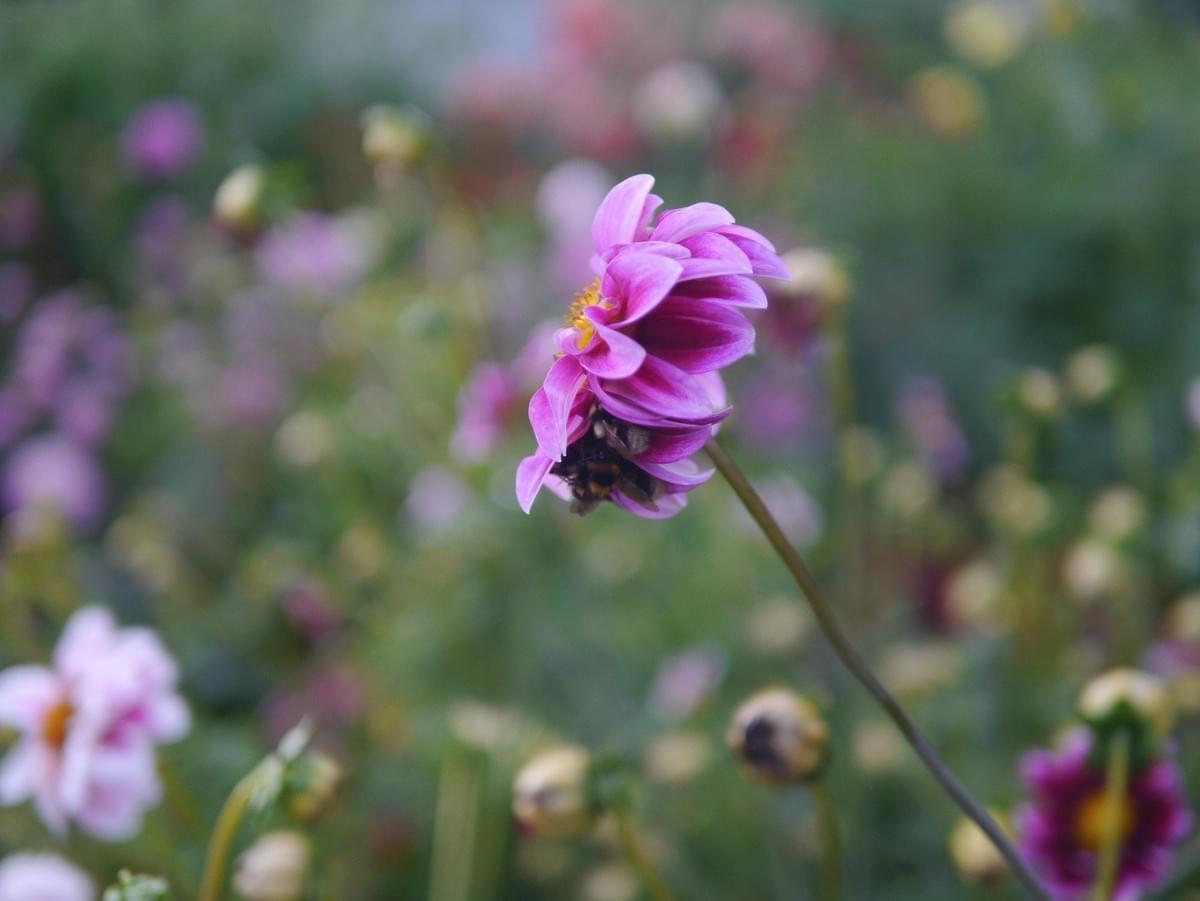
“Failure is Fertiliser”
Don’t worry if you kill your plants — I’ve killed more than I can count. We learn nothing from success, but every failure teaches us something new. A tray lost to damping off shows you the power of airflow.
A plant that withers in the sun teaches you about timing and shelter.
A drought year teaches you the value of mulch.
A variety that fails in your soil teaches you to choose more wisely next time.Every “failure” is just part of the curriculum. Each one leaves you wiser, stronger, and closer to abundance.
The garden is patient — it will keep teaching as long as you keep planting.
Choose Well
Choose seeds matched to your region, season length, and goals.
Every tomato tells you something before it even leaves the packet — where it comes from, what it's built for, how it wants to be grown.
Choosing well isn't about picking the "best" variety; it's about picking the right one for your patch, your climate, your goals.
Open-pollinated (OP) seed gives you the freedom to save your own seed year after year, growing true to type each time — a quiet kind of self-reliance.
Hybrids can offer vigour and disease resistance, but you won't get the same plant back if you save their seed.
Cold-hardy types suit short seasons; humid-tolerant types suit muggy ones. Northland isn't the same as the Wairarapa, and your garden isn't the same as your neighbour's.
The more varieties you try, the more you learn what actually thrives where you stand — and that knowledge becomes part of your own seed story.
So remember, a healthy garden isn't simply a collection of individual plants. It's a network of relationships. Different elements support one another, and over time, the whole system becomes stronger.
Choose with your place in mind, not just your palate.
Second Feather → Seed Selection.
Soil First
You can choose the finest heirloom seed in the world, but if it lands in tired, thin, or chemical-worn ground, it will struggle. Soil isn't the backdrop to growing tomatoes — it's the whole stage.
Northland's volcanic soils and pockets of loam are generous, but no two gardens are the same. A simple test — checking texture, drainage, pH — tells you more than any packet instructions ever could. From there, it's compost for structure, lime for balance, and mulch for moisture: small corrections that make an enormous difference over a season.
This is the philosophy that separates struggling gardeners from thriving ones — not luck, not green thumbs, just paying attention to what's under your feet before you ask it to feed you.
He kai kei aku ringa — there is food at the end of my hands.
Third Feather → Soil Preparation
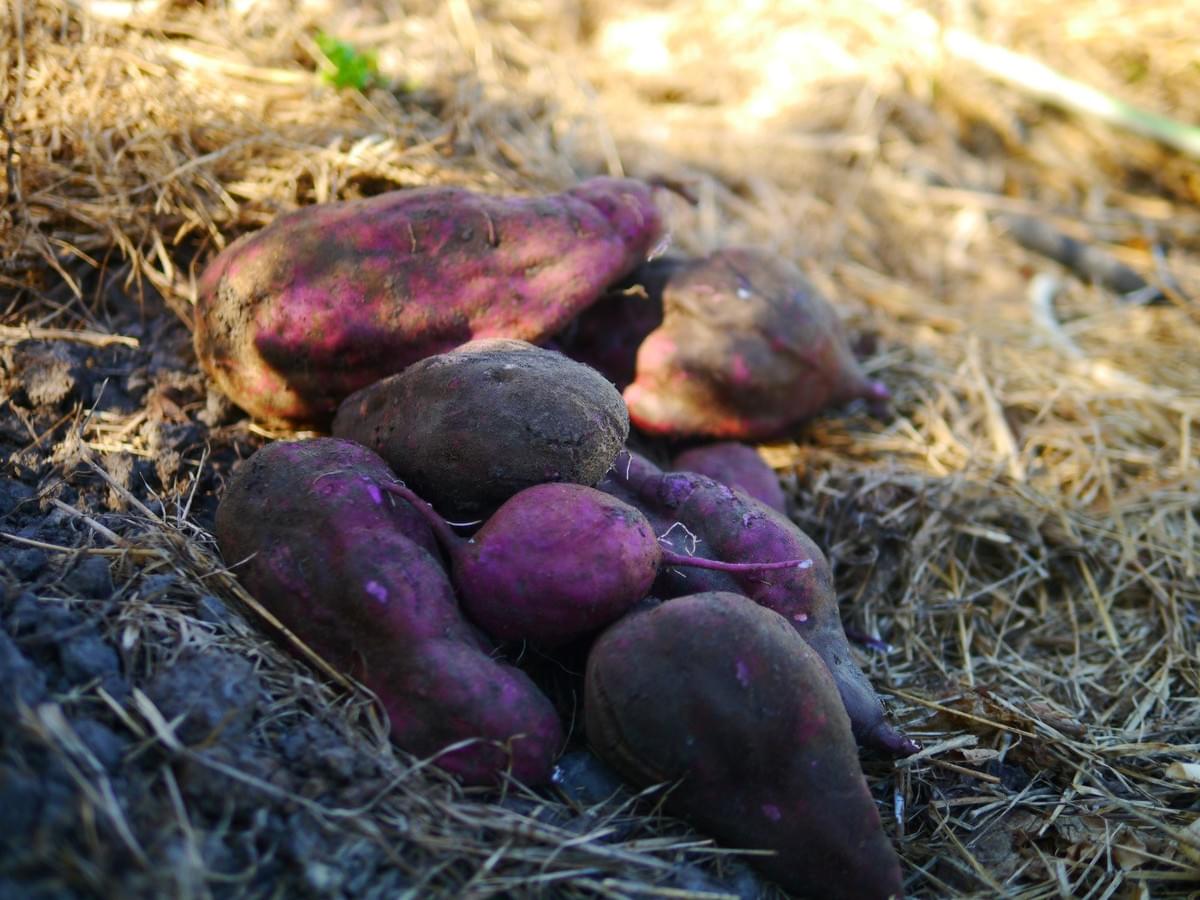
Healthy Soil Leads to Healthy Harvest
This Owairaka Red kūmara harvest from my Ōmanaia garden is a reminder that healthy soil is the foundation of a productive garden. Whether growing kūmara or tomatoes, it all begins beneath our feet.
So remember, a healthy garden isn't simply a collection of individual plants. It's a network of relationships. Different elements support one another, and over time, the whole system becomes stronger.
Timing & Patience
The most common mistake isn't a bad variety or poor soil; it's rushing. Tomatoes don't read calendars; they read temperature, and Aotearoa's spring can tease you with a warm week only to slap you back with frost a fortnight later.
Soil temperature matters more than the date on the packet. Tomato seed wants 18–24°C to germinate well. Below about 15°C, germination slows or stalls; below 12°C, seedlings can suffer tremendously, add wind and the chill factor kicks in and you have a lethal combination. A soil thermometer helps, but you don't strictly need one. Watch what's already growing around you. When daffodils are pushing green shoots, the soil's tracking around 10°C. Once they're flowering, you're closer to 15°C, a good sign to push ahead in a greenhouse, though still early for unprotected outdoor sowing.
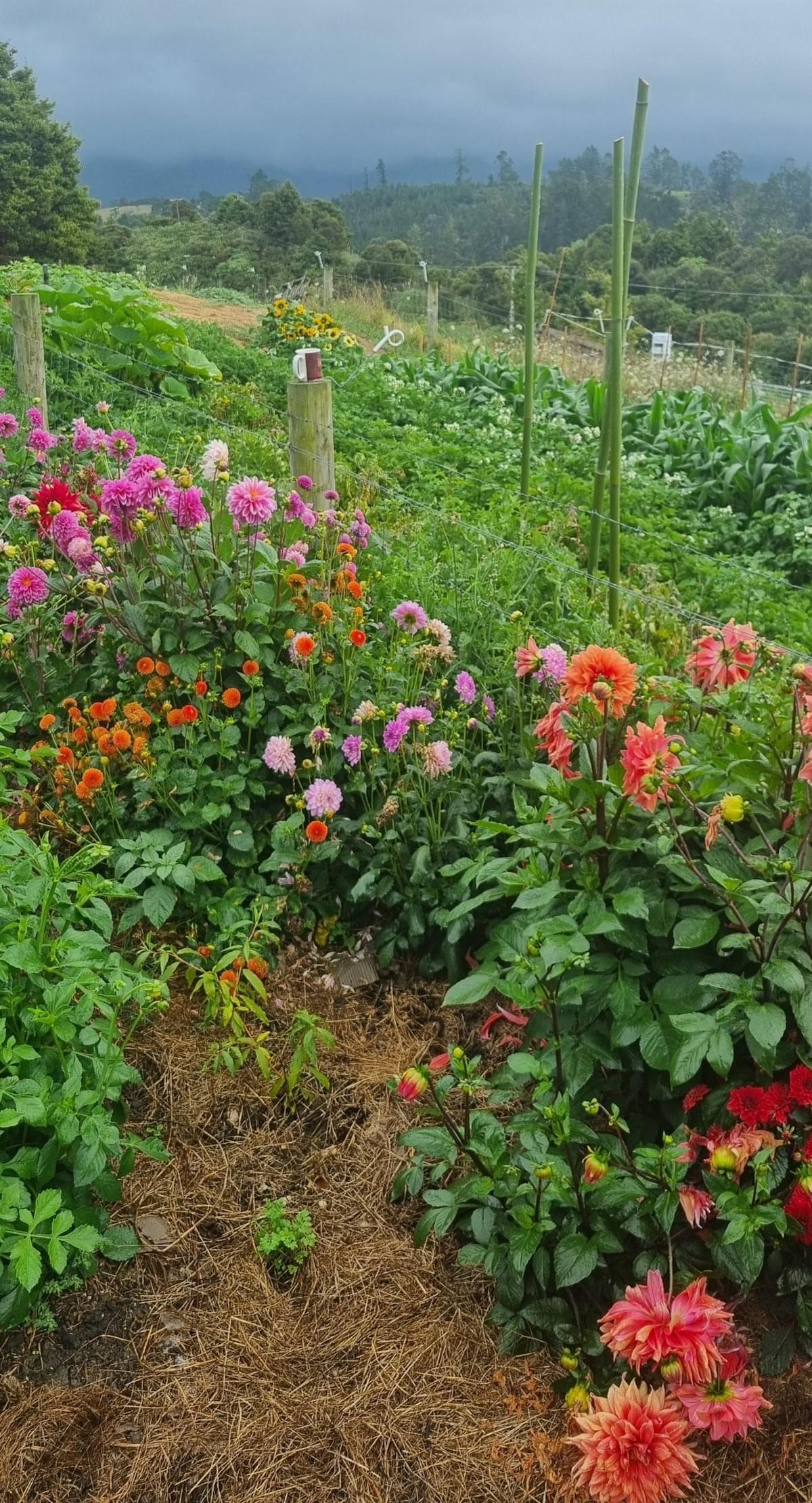
Hardening off is not optional. Seedlings raised indoors or under cover are soft — thin-walled, tender, unused to wind or direct sun. Moving them outside too fast can set them back further than if you'd waited an extra week. Give them a gradual introduction: a few hours outside in dappled shade, a little more each day, until they can handle a full day and a cool night without wilting or scorching.
Patience compounds. A seedling sown two weeks "late" into warm, stable soil will often overtake one sown early into cold ground and stalled for a month. There's no prize for being first, only for being ready.
The garden keeps its own time. Learn to read it, and it will teach you everything else.
Fourth Feather → Growing Tomatoes

